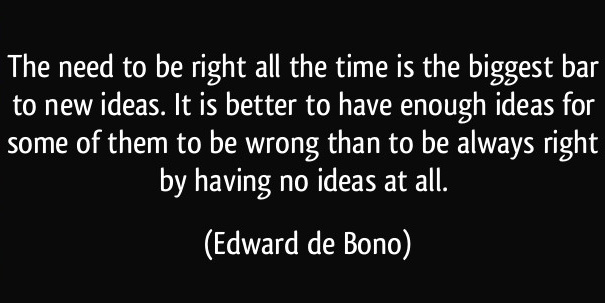
In the wake of much political animosity over various cases of alleged excessive police brutality resulting in death (i.e. Michael Brown, Eric Garner, Tamir Rice), I have had very heated discussions with individuals on both sides of the argument on whether these incidences constituted excessive force and/or were driven by racial profiling as well as whether or not the officers involved should face consequences. Advocates on both sides of the argument feel very passionately about their stance. They pull out facts from the case and build their arguments based on information from various sources including Internet, TV, and media pundits. I had one such argument with a friend who was arguing that Eric Garner was murdered on the sidewalk and that the cop gave no respect to human life when he took down Garner in a chokehold as Garner was complaining that he couldn’t breathe. My friend argued that this cop should be held accountable because the chokehold goes against NYPD policy and shouldn’t have been used. I don’t deny that the policy was violated. Where I differ in my views is that the cop should be charged with a homicide. This case is not a clear-cut case of racial discrimination ending in a hate crime. This case shows a black man resisting arrest and being brought down and subdued so the officer could take him into custody. What resulted was a tragedy. Eric Garner died from complications stemming from the chokehold as well as other factors including his acute asthma, obesity, and cardiovascular disease.
Here is the thing: Do I think the officer meant to kill Eric Garner? No. Do I think the officer could have acted in a more appropriate manner? Of course. He was using a move that went against policy. What this tells me is that officers need further training in handling situations where a perpetrator resists arrest. And maybe this officer should even be suspended or penalized for going against policy. What I don’t think is that he should be on trial for murder.
I am actually a huge advocate for taking measures to prevent racial profiling, and I do believe there are too many instances in this country where we could take aggressive action in holding police officers accountable for that crime. I know it happens and there need to be consequences. That being said, I don’t see how, based on the video presented, this particular officer could be charged with racial profiling or with murder. But despite what I think, my friend continued to argue his point because he is adamant that this case should be used as an example that racial profiling happens on a regular basis and officers need to be held accountable.
When someone has an agenda, they have a tendency to shut out all rationale that doesn’t support their cause. They have a genuine need to be right. This creates bias. Again, I don’t deny that racial profiling exists, but I am not going to argue that it is occurring in every instance involving a black man and a white cop just because there is opportunity to do so. I tend to make very few conclusions in cases such as these. I do this because 1) I don’t nor could I possibly have all of the facts necessary to come to a definitive conclusion and 2) I don’t want to skew the reality of a situation because I think I know what went down. I am not a juror with all of the evidence being presented. I am a citizen of this country trying to sift through all the junk and inaccurate information being put out there in order to get to the truth…a very challenging feat this day and age.
I enjoy debating. I like to hear different viewpoints in a case. The reason I like to hear all different viewpoints is because it gives me another perspective, and I can learn a lot from others by hashing out the facts of the case and coming to an understanding of their perspective. What I do not enjoy about debating is when the person I am debating with does all of the talking and none of the listening. When they are hell bent on proving me wrong rather than listening to other perspectives or considering a “devil’s advocate” mentality. I often pose sides I don’t necessarily agree with just to get someone’s response. However, when they begin to insult my intelligence because I supposedly don’t know enough or because I don’t see a situation through the same lens that they do, we have a problem. We have a communication breakdown. That is my cue that they no longer have and maybe never had a goal of coming to an understanding but, rather, have a direct need to be right.
When we debate or argue because we need to be right, we cease to be effective in creating the change we are fighting for. If we debate and argue to come to an understanding, only then can we break down barriers and find common ground. Even in situations where we can’t find a solution that both parties agree on, if we have at least been heard and understood, there is a baseline for progress. And isn’t that what we all want…progress? We aren’t going to solve these complex issues overnight. But if we can move the issue forward towards a place where change can occur, then we are truly contributing to the movement.
Self-admittedly, I have been caught myself in the need to be right. The problem with approaching arguments in that manner is that we are not open to another perspective and, therefore, prone to not only alienating the very people we are trying to convince, but we are cutting off any opportunity for dialogue and, ultimately, for understanding and learning. I am certain that I don’t have all the facts in the majority of cases that are debated on a regular basis in the news. I have some facts that I use to help sift through my own feelings and my own stance on an issue. I do research many times to further provide clarity on an issue. But I try never to get to a point where I think I might have all the facts and, therefore, have no reason to see a perspective other than my own. The fact of the matter is there is always another perspective. Whether or not that perspective deserves validation is up to each of us to decide. But I can’t know my stance without truly hearing and ruling out other perspectives and being open to their possibilities. These days my need to be right is trumped by my need to understand each and every situation I am dealing with. When I outwardly admit that, I sometimes get insults such as I am “intellectually lazy” or I don’t have all the facts. Isn’t that what I am trying to do when discussing these issues…get more facts? Doesn’t the fact that I put forth energy to have these discussions with others validate that I am actually quite intellectually proactive, not lazy? And by the way, insults are the fastest way to polarize someone away from your cause because you automatically put them on the defensive. I don’t recommend it.
We are turning into a culture where “needing to be right” is an epidemic. We need to be right out of our fear and insecurity. What if we did the opposite? What if we admitted that we don’t know everything and that maybe our experience is quite different from those of others? What if we tried to understand those other experiences before coming to a conclusion? How different would our world be if we didn’t rush to judgment and were more thoughtful about the issues our country faces? What if we approached the problems of our society with an open attitude of “How can I better understand those that are directly affected by these issues?” What if we came from a place where, rather than needing to prove our point, we made the decision to understand the other points of view? What if we listened more and spoke less? The world would be a much more beautiful and compassionate place to live, and progress just might be made more quickly.
 Notes In the Margins