Ever since that fateful day on August 9, 2014 when Michael Brown was shot down in the streets of Ferguson, Missouri by Darren Wilson, I have been thinking and processing and ruminating and debating with others about the issues surrounding this incident and its implications of racism. I feel as though I understand both sides of the argument and where people are coming from. Those on the Michael Brown side view the incident as an injustice, as an example of racial profiling being unveiled and violently enacted in the street to an unarmed black man. On the other side, there is a white cop who is trying to perform his duty, trying to move two young black men from the middle of the street, fearful for his own life in dealing with what many call a thug who threatened and attacked him. I do not deny that Darren Wilson deserves a certain amount of respect in the fact that he put his life in jeopardy every day trying to keep the streets of Missouri safe. I also do not deny that despite inevitable biases (that we all have), cops go out and do their jobs to the best of their ability, and I am grateful for the work they perform every day to keep my life safe and free of violence. This fact is indisputable. I also do not deny that hundreds of unarmed black men die every year at the hands of cops for seemingly no reason other than being in the wrong place at the wrong time. The numbers are staggering, whether people want to acknowledge the problem or not.
I agree with the Darren Wilson side who argue that black men do not help their cause when they present themselves in a certain way with saggy jeans and a mouth full of slang words and gang talk. On the other hand, we do live in a country where we are allowed to express ourselves in any way we choose as long as we are not harming others. And many black people choose to express themselves in a very culturally significant way, identifying with “their people.” Wearing saggy pants and talking with a certain swagger does not automatically make them a criminal…not in this country. And then there are those who argue that blacks are killing each other at far greater rates than white cops are killing black men. This is another good point that speaks to the issues of poverty, opportunity, and education. There is a strong need to reform many systems we have in place including our welfare and our educational systems as well as gun control. I do not deny these realities either.
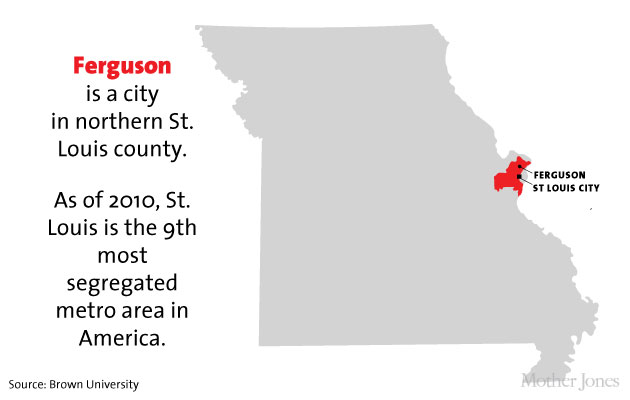
I understand all of the arguments on both sides of the line that have divided that community in Ferguson, Missouri, and our nation as a whole. No one can deny the history of negative race relations in that community or how Ferguson, Missouri was formed out of a direct initiative in the 1970s to push blacks into the cramped ghettos in which they currently live. I understand the Darren Wilson supporters who feel that this is still America and it is not 1970 and blacks have the power to change their situations if only they would pull their pants up, apply themselves, and stop relying on welfare to support them. Although, in my mind, this is a very narrow and stereotypical view of what is actually going on in black communities, I understand the mindset from which these critics speak.
There is one problem that neither side is recognizing. On both sides of this important issue, people are not recognizing their own bias. We all have biases. We all have innate feelings about people within a certain gender, ethnicity, sexuality, religion, and/or race. However, we don’t always recognize those biases. Biases are prejudices we form from our parental and societal upbringing that dictate our reactions and emotions in situations that force us to react first and think second. For example, I believe very strongly that blacks are equal to whites; however, because of my upbringing, I still have a tendency to make generalized comments of the black community that are not accurate but, rather, reflect what I was taught as a young child. I often have to correct myself and realize those thoughts are inherently wrong and misguided. But because I learned them at such a young age, they are difficult to unlearn.
I feel very strongly that the only way to alleviate the racial tensions of our time are to begin validating the experiences of those on both sides of the issues. We need a national conversation or dialogue, not finger pointing and blame. And we need to be very aware of our own biases and how they skew our view of reality.
Throughout the course of the last few months as article after article and report after report have blamed one side or the other for the failings of our justice system versus the failing to hold an entire race accountable for the actions of a few, I have continued to fight the urge to become depressed at my own feelings of inadequacy in making any difference whatsoever to change this polarizing climate. The only action I really can take is to give voice to those of us who recognize that there are serious issues on both sides of the coin that are going unheard, and we want both sides to know that we are here to listen and to try to move forward towards change. I believe we can only do that if we are willing to do three things: listen, validate, and recognize our inherent biases.
It is so important to listen to the other side. They are coming from a very real place of frustration and fervor. They are justified in their feelings and emotions. Quite possibly they are either misguided or influenced by bias, but we can’t know their true intentions without listening to their point of view. There are no easy answers in a case like Ferguson; however, without the ability to truly hear each side’s experience, we will never come to any sort of understanding and, consequently, never reach a solution to the problems and resulting changes that need to be made.
It is equally important, once we’ve listened and truly heard each side, to validate their experience. Without validation of one’s experience in their community (experiences of racial bias, police brutality or profiling, near death run-ins with blacks as a cop, overwhelmed and overworked police forces trying to maintain peace, etc.), no healing can take place. But beyond listening and validation, we have to take it a step further into action to repair the tension-filled relations on both sides of the proverbial street.
Lastly, we must begin to be proactive in facing our own biases as they relate to all people whether through gender, sexuality, race, religion, or any other identifier that classifies us in a certain way. We ALL have biases that form our thoughts, opinions, and ultimately our actions and responses towards others. If we can be diligent and aware enough to face them and own them, only then can we begin to deconstruct them and do away with them for good. No race, gender, religion, sexual orientation, or any other personal identifier is inherently better or worse than its comparative counterparts. We are all unique and special. We can most definitely be influenced by the societies we grow up in, which inevitably help to form our beings. However, they do not ultimately define us. The reason this country is so great is because it recognizes our right to be who we are individually among a nation of so much diversity. We should not be defined by the color of our skin or the nature of our sexuality. Our biases, however, many times prevent us from practicing that inherent right.
We will probably never know what actually happened that day in Ferguson on August 9, 2014. Whether right or wrong, the case went through our system of justice as it is set up today. We can only take a look at those systems in place and review whether they are fair or not and determine if justice was served and, if not, how we can do things going forward to improve the system so that it becomes less fallible. But we can’t get to that determination without taking an honest look at the systems that are currently set up: the judicial system, the racial caste system, the legislative system, the educational system, the welfare system…the list goes on and on. Taking an honest look at a system is not about pointing the finger or blaming one side versus the other. Evaluating the current systems we have in place is about listening to the experiences of our citizens, validating that experience and letting them know they have been heard, recognizing and squashing our inherent biases, and moving into action to change our systems for the better.
Many people have told me that change is not possible and that there will always be racism, distrust, subservience, corruption, etc. I refuse to believe that. I am not ready to throw in the towel. I believe the human race has become more humane and more compassionate over time. Changes are happening. Just because we may not see a complete shift in our own lifetime does not mean we shouldn’t make efforts towards the shift for our children and their children. People will say I am an idealist. Maybe so, but if we aren’t fighting for our ideals, what are we fighting for? What are we living for? Love and compassion are the threads that bind us together, and I still believe love and compassion can save and preserve our humanity if only we put down our guns and our bitter tongues and use our ears and our helping hands instead to bridge the gap of understanding towards healthy and happy communities.
 Notes In the Margins
This was a very balanced and insightful response to the situation in Ferguson. At the end of the day, there were too many questions that went unanswered. And the only way to have begun the process of answering those questions were to have had a trial. And due to that fact alone, it was a clear miscarriage of justice.